Half a Yuan for a Portrait — The Warmth of a City Drawn in a Single Stroke
Half a Yuan for a Portrait — The Warmth of a City Drawn in a Single Stroke
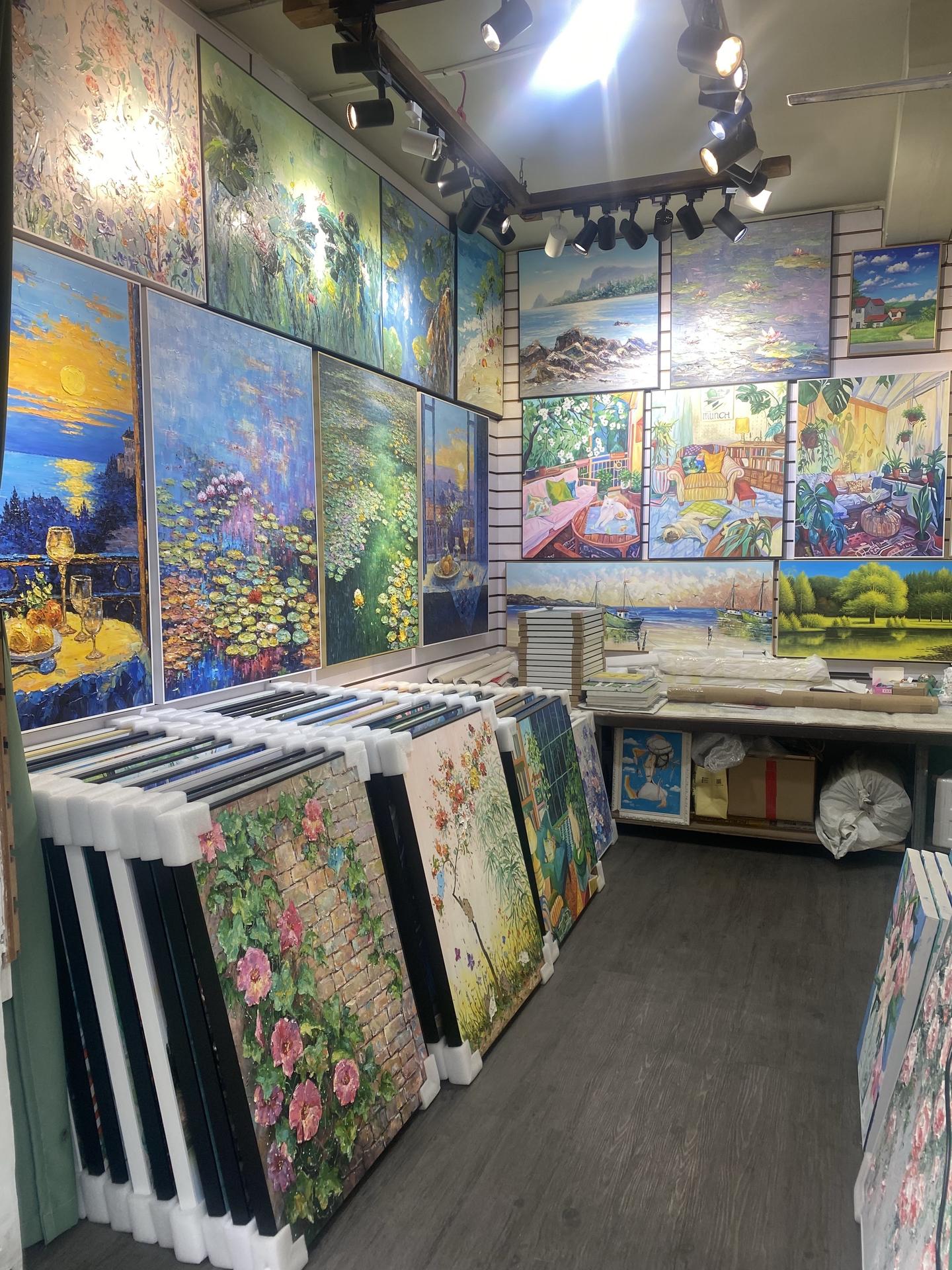
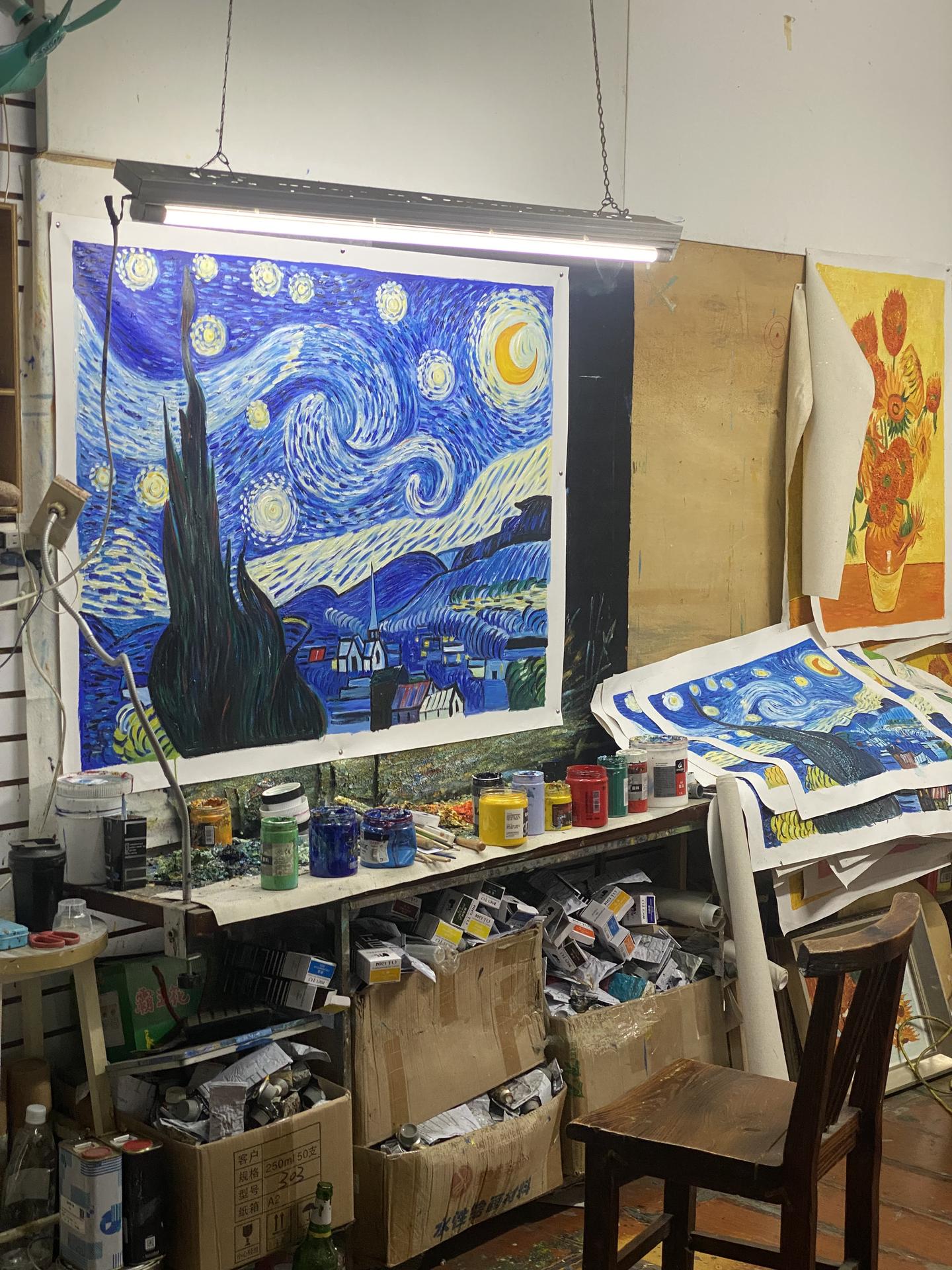
Shenzhen summers are relentlessly hot and humid, yet on a street corner in Dafen Oil Painting Village, there is a small stall where people willingly stand in line for hours.
At the stall, a white-haired old man bends over his work. With a gentle flick of his wrist, the pen touches paper, and within a few seconds, a "portrait" is complete. The customer stares at the paper for a moment — then bursts out laughing. On the page: one circle, two dots. This is the legendary "0.5-yuan oil painting portrait."
The man who inspires four-to-five-hour queues in exchange for a half-yuan sketch is known as Charlie. His real name is Cha Shuren, a 67-year-old painter from Northeast China who has woven a quietly extraordinary story in Shenzhen's Dafen Oil Painting Village.
One Portrait, Many Price Points, One Philosophy
Walk up to Charlie's stall for the first time and you might think you've misread the price list.
0.1 yuan buys a single brushstroke — minimalism pushed to its philosophical limit. 0.5 yuan gets you a circle and two dots, barely qualifying as a face. 1 yuan yields a recognizable outline with a nose and a mouth. Go higher — 8 yuan, several dozen yuan, even over a hundred yuan — and you encounter a true, meticulously crafted oil painting portrait, every stroke a testament to his decades of training.
The pricing logic seems absurd at first glance. On reflection, it's quietly brilliant. Charlie explains it with characteristic casualness: "I watched everyone undercutting each other, driving prices lower and lower. So I followed along. By the time I got down to half a yuan, all that was left was a circle and two dots. I slapped it down in an instant and thought — this is actually pretty fun."
What began as a joke evolved into his signature artistic philosophy — what he calls "subtraction art." The lower the price, the fewer the strokes, the larger the silence, and somehow, the more the viewer is left to feel.
Yet among all his works, the most thought-provoking carries a price tag of 0.0 yuan.
A blank sheet of paper. No image at all. Only a small note written along the edge:
Hello, friend. If you are reading this, how lucky and fortunate you are — you are still alive. We come into this world chasing fame and wealth, but in the end, everything returns to zero. Peace, health, and happiness are the greatest riches.
No brushwork, no color, no technique of the oil painting portrait master — and yet this is, perhaps, the heaviest piece he has ever made. Visitors stand before that small sign for a long time. Faces tight with the pressures of modern life slowly, visibly relax. Some say the words dissolved their anxiety entirely. Others quietly wipe their eyes.
Behind a Street Stall, Sixty-Two Years of Mastery
Many who encounter Charlie for the first time see only a charming old man at a roadside table. To truly understand him, you must understand the depth of craft and life experience behind that easy smile.
Charlie picked up a paintbrush at age five. He has not set it down in sixty-two years. His specialty is oil painting. Before retirement, he was an art teacher who mentored generations of students, and his works were selected for national fine arts exhibitions. In every professional sense, he is a genuine master of the oil painting portrait — a man whose technical ability is unquestionable.
That is precisely what makes his half-yuan circle so delightful. It is not a compromise of skill. It is a deliberate, wisdom-saturated choice to "scale down" — not because he cannot paint more, but because he has thought deeply enough to understand that sometimes, less is everything.
"A masterpiece is worth a masterpiece's price," he says with a grin. "Half a yuan is worth a circle and two dots. Every cent corresponds to its value. What's wrong with that?"
This simple philosophy of proportional exchange feels both old-fashioned and radical — honest in a world that often inflates and obscures.
Shenzhen Embraced All His "Strangeness"
Charlie has always been the kind of person others might call peculiar.
He once wrote letters to humanity five hundred years in the future, sealed them in bottles, and cast them into the sea. He painted himself a tombstone and visits it regularly to "sweep the grave" — a practice that keeps him mindful of mortality and the preciousness of each day. He set up a street stall selling oil painting portraits at prices that made fellow artists shake their heads, and he loved every minute of it.
In another city, these habits might have earned him sideways glances and the quiet verdict of "odd." In Shenzhen, no one batted an eye.
Shenzhen is, by nature, a city that accommodates the unconventional. People arrive from every corner of China and beyond, each finding footing through ability and hustle alone. No one has the standing to mock another person's way of living. Charlie says he loves this city — not only for its energy and openness, but for the small human kindnesses embedded in its daily fabric: free public transit for senior citizens, complimentary tissue paper in public restrooms. These modest gestures make an elderly man who came from far away feel genuinely welcomed.
Charlie first set foot in Shenzhen in 1986, when Dafen was just an ordinary urban village with no artistic reputation to speak of. Decades later, he returned after retirement and chose to stay. Dafen, now internationally recognized as China's premier oil painting base, offered him everything he needed: a vibrant artistic community, a constant flow of curious visitors, and audiences willing to stop and look at an oil painting portrait — whether it cost a hundred yuan or half of one. Most importantly, it offered him the freedom to be fully himself.
Dafen gave him his stage. Shenzhen gave him his home.
Is a Four-Hour Wait Worth Half a Yuan?
These days, visitors line up at Charlie's stall every day. Some wait four or five hours for a portrait he finishes in mere seconds.
Foreign tourists beam and hold up their fingers, calling out "zero point five" in broken Mandarin. When the tiny drawing lands in their hands, they laugh like children. Young people travel from across the country, carefully photograph the blank "0.0 yuan" sheet, and post it to social media with captions like: "I was healed by an empty page today."
People often ask: is it really worth standing in line for hours just for a half-yuan circle with two dots?
Charlie answers in his usual way — simply, but with weight. "Weren't you pretty happy standing in line?"
He's right. In an era defined by anxiety and relentless competition, spending an afternoon in an unhurried queue at a street painter's stall — chatting about nothing that matters to anyone's career — is itself a rare and generous form of therapy.
That half-yuan oil painting portrait depicts more than a face. It depicts a way of living: subtract what is unnecessary, look inward, and discover that peace, health, and a good laugh are already more than enough.