
Sunflower Canvas: The Revolutionary Masterpiece That Redefined Modern Art
Sunflower Canvas: The Revolutionary Masterpiece That Redefined Modern Art
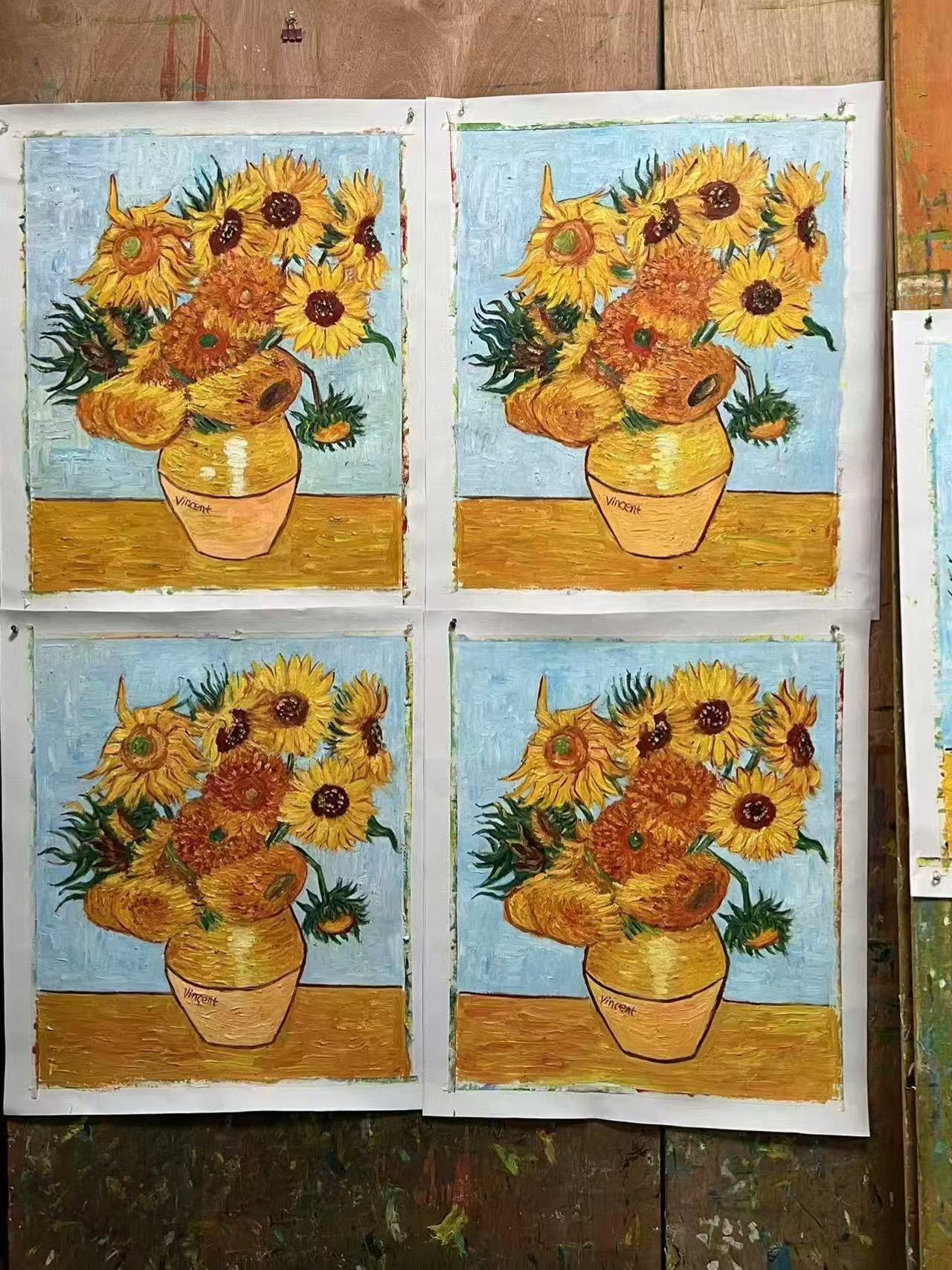
Sunflowers on canvas, one of the most iconic and revered works in the canon of Western art history, is the magnum opus of Dutch Post-Impressionist master Vincent van Gogh. Painted in 1888 during his time in the sun-drenched town of Arles, in the south of France, this sunflower canvas was part of a revolutionary series—Van Gogh created multiple iterations of the sunflower still lifes, each capturing the bloom in varying stages of life, from full, vibrant blossom to wilting, autumnal decay, alongside a companion series of wheat field paintings completed in the same Provençal landscape.
Across the sunflower canvas, Van Gogh conjures a blazing symphony of yellow, from the soft, buttery tones of fresh petals to the deep, burnt ochre of wilting blooms, set against a vivid, almost electric turquoise background that makes the golden hues sing. Every petal is rendered with thick, impasto brushstrokes—short, urgent, textured marks that give the flowers a tangible, three-dimensional vitality, as if they are still reaching toward the sunlight that nourished them. The heavy, ridged strokes of the earthenware vase anchor the composition, while subtle shifts in shadow and light across the petals capture the fleeting warmth of the Provençal midday sun. Where academic painting of the era demanded smooth, blended lines and rigid realism, Van Gogh dared to use raw, unmodulated color and expressive, almost chaotic brushwork to capture not just the look of the sunflowers, but the feeling of life and radiance they held. It was a radical reimagining of what a still life could be, one that would redefine the boundaries of modern art.
This sunflower canvas is not merely a still life, but the cornerstone of Post-Impressionist art, and a defining work that paved the way for the abstract and expressionist movements of the 20th century. Where the Impressionists sought to capture the fleeting effects of light on the natural world, Van Gogh went further, infusing his work with raw emotional intensity and personal symbolism. For the artist, sunflowers were more than flowers—they were a symbol of gratitude, of friendship, of the radiant life he sought to build in Arles, and a celebration of the sun that had reignited his creative spirit. The series embodied the core ethos of Post-Impressionism: to move beyond literal representation, and use color and form to convey emotion and inner truth.
The sunflower canvas and its companion works were first exhibited publicly in 1890, at the Salon des Indépendants in Brussels, alongside works by Paul Gauguin, Henri de Toulouse-Lautrec, and other avant-garde artists of the era. The exhibition marked one of the few public showings of Van Gogh’s work during his lifetime, and while it drew the attention of the art world, it was met with widespread scorn and confusion from audiences and critics accustomed to the polished, academic style of the official Paris Salon. Viewers recoiled at the thick, unblended brushstrokes and the bold, unnatural color choices, dismissing the works as amateurish, unfinished, even the product of a troubled mind. Critics of the era derided the sunflower canvas as “a mess of paint thrown at a canvas by a madman”, with one writer for a prominent Parisian art journal sneering that the work “lacks all sense of beauty, all respect for the traditions of fine art, and can barely be called a painting at all.”
Yet Van Gogh, alongside his fellow Post-Impressionist peers, remained unshaken in his artistic vision, even in the face of relentless criticism and public rejection. He continued to refine his sunflower series, exploring new depths of color and emotion, and remained committed to his belief that art should speak to the soul, not just the eye. Though he would not live to see his work celebrated, the very qualities that were mocked in his lifetime—his bold use of color, his expressive brushwork, his unflinching emotional honesty—are what make this sunflower canvas one of the most beloved and influential works of art in the world today. It stands not just as a masterpiece of Post-Impressionism, but as a testament to the power of artistic courage, and a work that redefined the very language of painting for generations to come.
We Also Recommend
Your cart is currently empty.
Cart